Pages

Wednesday, May 27, 2020

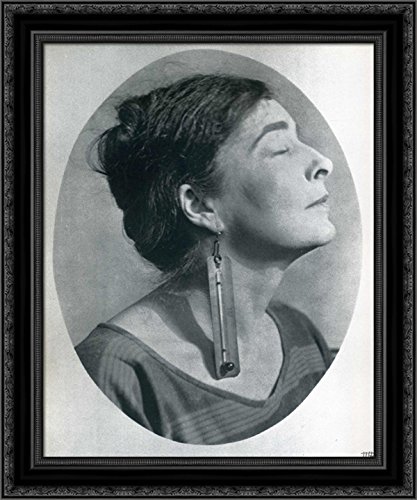
Mina Loy, Songs to Joannes

Songs to Joannes is a poem written by Mina Loy in the twentieth century. This poem focuses on themes such as the strain that war has on relationships; women taking over men’s work; and women changing routine in order to work. “Mina Loy, as the ideal modern woman at the turn of the twentieth century—having numerous love affairs, perpetually traveling internationally, and writing controversial poems—subverts these traditional tropes and expectations of love poems throughout her work” (Leahm). She writes about the resilience of women during this trying time in history. A time when many men as young as 18 were drafted for World War I and forced to leave their loved ones.

While this fatalism and pain certainly play a large role in the poem, “Songs to Joannes” does not wholly fit within this bleak modernist category; hints of beauty of potential optimism lurk beneath its surface. Through her refusal to adhere to the conventions of traditional love poetry but not quite writing the vehement modernist anti-love poem either, Loy offers a deconstruction and subsequent fresh reconstruction of love in the modern world—messy, unprecedented, and undoubtedly painful, but capable of new beauty and significance despite that (Leahm).

            During WWI, while men were being drafted and leaving to go fight in the war, women had to take on the nontraditional role of being the breadwinner and working for a living. Before this time, women represented privacy, domesticity, and were meant to be the child bearers. Men were represented in the public; they worked and brought home the money to support their family. Women were resented for entering the workforce as if they had gained a sense of freedom at expense of men’s lives. The reality of it was that society was not ready to except that the societal norms were changing. Loy writes in her poem, “evolution might fall foul of sexual equality”.
Five Things about Mina Loy's “Songs to Joannes” » Marsha Bryant ...

Leahm. “Love as a Broken Art: An Examination of Mina Loy’s ‘Songs to Joannes.’” Terrible Beauty F16, 7 Oct. 2016, courses.suzannechurchill.com/mopo-f16/2016/10/07/love-as-a-broken-art-an-examination-of-mina-loys-songs-to-joannes/.

Saturday, May 23, 2020

Robert Louis Stevenson, The Strange Case of Dr. Jekyll and Mr. Hyde

What is good? What is evil? These are the main questions that come to mind when reading The Strange Case of Dr. Jekyll and Mr. Hyde. This story follows Dr. Jekyll, a well known and respected London doctor who develops a drug that enables him to separate his evil, pleasure-loving self from his upright, respectable self. Throughout the story, he experiences a double life until his evil side starts to take over. The battle between good and evil is a reoccurring theme throughout the reading including instability of self; the effects of repression; and the code of secrecy among professional men.

Dr Jekyll and Mr. Hyde represent good and evil and its ongoing battle with each other. However, Jekyll is not evil to begin with; he is someone whose pleasures did not line up with the expectations and restrictions of society. He wanted to keep is “respectable” qualities separate from his “evil”, “sin-seeking” qualities; thus, creating Mr. Hyde.

“The Late Victorian era was famed for its outstanding morals and social customs, and was often seen as being a period of peace and perfection for England. England’s poster city, London, was said to be the pinnacle of excellence and a place of prosperity, where people behaved within the boundaries of the highest moral standards” (Mack). However, this idea of the perfect society was merely a façade. Often, during this time, people were encouraged to hide their true selves. I believe that Stevenson wanted to expose these flaws in London’s history by creating the character know as Mr. Hyde. Hyde represented the imperfections of society and people and the dualities of human nature that led to London’s repression.

The story of Dr. Jekyll and Mr. Hyde define male society during the Late Victorian era. Men were expected to embody “respectable”. This meant that they were to represent sobriety, thrift, cleanliness and honesty. Often times, men would cover for one another in order to preserve these ideals. Secrecy played a big role in society and in this story. The “code of silence” would bind men together in this patriarch.

One example of secrecy comes from the part in the story where Dr. Lanyon, a doctor and close friend of Jekyll goes to his death without exposing Jekyll’s secret. Instead, he leaves a letter for Mr. Utterson, the lawyer that in the event of Jekyll’s death that he would keep the faith. Another character, Enfield, a cousin and friend of Utterson, directly avoids any knowledge of others’ secrets. Enfield says: “I feel very strongly about putting questions; it partakes too much of the style of the day of judgement. You start a question, and it’s like starting a stone. You sit quietly on the top of a hill; and away the stone goes, starting others; and presently some bland old bird (the last thing you would have thought of) is knocked on the head in his own back garden and the family have to change their name. No, sir, I make it a rule of mine: the more it looks like Queer Street, the less I ask.”

Amazon.com: The strange case of Dr. Jekyll and Mr. Hyde (Active ...

Mack, Valerie. Reputation and Social Perfection: The Social Creation of Mr. Hyde. 2012, pp. 2–3.

https://digitalcommons.iwu.edu/cgi/viewcontent.cgi?article=1002&context=gateway


Thursday, May 21, 2020

George Meredith, Modern Love, Sonnets 1, 16, 17, 49

“In the United States, there is approximately 1 divorce every 36 seconds. The top 5 reasons for divorce include communication problems; infidelity or betrayal; financial problems; psychological, emotional, and physical abuse; and loss of interest” (Pfeiffer). Sonnets written by George Meredith entitled Modern Love cover this very topic of unhappy marriages. Although Modern Love was written during the Late Victorian Era, it still covers themes that are relevant today.

Meredith’s writings follow the experiences of a husband and wife who are stuck in an unhappy marriage. Sadness, infidelity, and secrets are the main themes depicted in Modern Love. Meredith chose these themes to represent his idea of what love and marriage look like. Throughout his sonnets, he takes us on an emotional rollercoaster with feelings of remorse and anger countering with the feeling of being content. These up-and-down feelings are best represented in the first sonnet where Meredith writes:The strange low sobs that shook their common bed were called into her with a sharp surprise, and strangled mute, like little gaping snakes, dreadfully venomous to him. She lay stone-still, and the long darkness flowed away with muffled pulses.”

This piece of literature is very one-sided. We hear a lot from the husbands perspective and little from the wife. In every story, there is typically more than one side to be told. However, given the time period, it is understandable why the woman’s perspective was not exposed. We know that during this time in history women had very few rights; men always got the last say.

The problems depicted by Meredith in his writing about unhappy marriages are reflected today in a sense. However, it is worth mentioning that during the Late Victorian period, divorce was looked down upon by the public. Therefore, it was difficult to obtain. In comparison with todays view of divorce, it is much more common and not as much of a spectacle as it would have been so long ago.

George Meredith's 'Modern Love' to Shakespeare's traditional love ... 

Pfeiffer, Edrie. “What Are the Statistics on Divorce in America?” Hampton Roads Legal Services, www.hamptonroadslegal.com/faqs/facts-on-divorce-in-america.cfm.


Friday, May 15, 2020

The Women of England, Their Social Duties, and Domestic Habits. Ellis, Sarah Stickney, 1812–1872. Chapter 1

           This document was written by Sarah Stickney Ellis in 1839. The Women of England, Their Social Duties, and Domestic Habits Chapter 1 describes the women of Great Britain and their influence within the “domestic sphere”. When this book was written, The Victorian Age was just taking its first steps. It was only two years prior, from the time this was written, that Queen Victoria ascended the throne. Queen Victoria was a large influence in England and shaped the habits and virtues of that time. Victoria reflected values of moral responsibility and domestic propriety. I believe that Ellis echoed those values through her writing. She writes about guidelines that women are expected to meet and refers to them as “home comforts” and “fireside virtues”.

Ellis speaks highly of the women of England in her writing; she states: “I do believe that the women of England are not surpassed by those of any other country for their clear perception of the right and the wrong of common and familiar things, for their reference to principle in the ordinary affairs of life, and for their united maintenance of that social order, sound integrity, and domestic peace, which constitute the foundation of all that is most valuable in the society of our native land (p. 36).”

The author starts off her writing by pointing out the negativities that she views from the raising generation. She challenges them to do better and to lead their communities as much as they can. She writes: “By far the greater portion of the young ladies of the present day, are distinguished by a morbid listlessness of mind and body, except when under the influence of stimulus, a constant pining for excitement, and an eagerness to escape from everything like practical and individual duty (p.12).”

After reading this section of the chapter, I was compelled to reflect upon the role of women in 1832. It was this year that the Reform Bill changed voting rights by granting a political voice to many among the working class who had not had a voice. However, women were not included in these reforms. This period saw little progress for women’s rights; women had little access to education, could not vote or hold public office, and could not own property. Nonetheless, Ellis discourages this behavior and states “you have deep responsibilities, you have urgent claims; a nation’s moral wealth is in your keeping (p.13).”

Throughout this chapter, Ellis writes a great deal about the significant influence that women have within their circles, or “domestic spheres”. Although she believes that men are dominant, she also believes that women have subtle power. “Whatever may be said of the capabilities of man’s hand, I believe the feminine qualification of being able to use the hand willingly and well, has a great deal to do with the moral influence of women. The personal services she is thus enabled to render, enhance her value in the domestic circle (p.16).” Her writing in this chapter reflected the women’s need to create fulfillment and happiness amongst the home and in others; this allows for a women’s’ greater influence in society that Ellis so diligently convers.


 Ellis, Sarah Stickney. “The Women of England, Their Social Duties, and Domestic Habits.” Victorian Women Writers Project, Indiana University, webapp1.dlib.indiana.edu/vwwp/view?docId=VAB7198&chunk.id=d1e561&toc.id=d1e554&brand=vwwp;query#docView.